Showing posts with label aDNA. Show all posts

Friday, 21 September 2018

Ancient DNA in charred grains? More bad news.

No one can have missed the massive impact that ancient DNA has been having on the history of human populations and those of several domesticated animals. Bones, at least some of them, provide a nice venue for the preservation of old genomes. Plants have featured much less in this story, with estimates of 200 C) for sometime (many hours)-- does not do DNA any favours. This who have worked on ancient DNA have tended to focus on desiccated plant remains- from dry desert contexts.

A  new report on ancient DNA extraction from archaeological grains (Lundstrom et al 2018), in this case barley, from Medieval and Late Medieval Sweden, reports some good success from some dry grains from a 17th century's Bishop's burial, some success from waterlogged specimens but no success from 46 charred grains. This replicates similar attempts to get aDNA out of charred Finish barley (Lempaiainen-Avci et al 2018) and methodological trail of Nistelberger et al. 2016 who tried High-Throughput Sequencing ("shotgun sequencing") on various charred archaeological grapes, maize, rice and barley (Pictured at right), including rice provided by my lab from India, Thailand and the Comores. Nistelberger et al. concluded that charred material is likely to rarely yield sufficient reliable genetic data, a conclusion re-iterated by two Scandinavian studies.


The open question is what does this entail for older aDNA results, using "old-fashioned" methods, i.e. targeted PCR, to extract chloroplast DNA, which appears to sometimes be quite successful in differentiating indica from japonica rice for example (Castillo et al 2016), or which was used in the early days of aDNA in the 1990s to separate tetraploid from hexaploid wheats (e.g. Allaby et al 1997). Estimates then were that maybe 5% of charred grains might have some aDNA in them, but maybe those were generous over-estimates? Are we now supposed to reject such earlier work and methods out of hand? Or does it mean that methodologically, there is something about current high-throughput methods that has not solved the problem of dealing with the highly fragmented and sparse DNA that is thought to be preserved in a minority of charred remains? Reading the fine print, Nistelberger did identify a small amount of ancient DNA reads, but they regarded them as so few as to be "inconsequential". But if little is all we are left with maybe we need to change our aims to make these consequential through the questions we ask of them?

Sunday, 4 March 2012

Permafrost anceint DNA

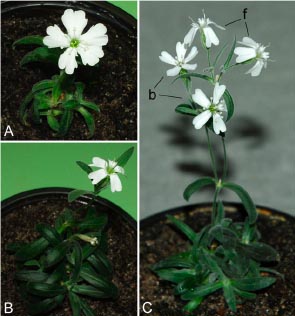
One of the most remarkable, and unusual, pieces of archaeobotany I have seen lately is the report of bringing back to life Pleistocene campion (Silene) flowers, published by Yashina et al in a recent PNAS. Ancient seeds did not themselves germinate, but their genetic material, from immature fruits, was cultured in vitro and then propagated clonally. So the images at right are clones of a plant that was trapped in frost some 31,800 years ago. It is not strictly archaeological, there is no report of a human site there. Direct AMS dates put fruits, apparently from ancient rodent (squirrel) burrows back to over   30,000 years old. 

There are of course periodic reports of extremely old seeds germinating, although in most cases is unlikely that seeds of more than about a century or so, with germinate. See, for example, Barbara Youngman's old review on the germination of old seeds (in Kew Bulletin 1951). "Mummy wheats" are a myth. In general,  longevity may decrease rapidly for many seeds after a decade or so. But natural ice mummy seeds, would appear to be a reality, or at least a source of genetic material that might be propagated by lab methods. As seed banks have learned freezing temperatures can keep seeds longer, slowing down all manner of  enzymatic and decay processes-- part of the rationale for Norway's Svalhard ice burrowing seedbank. 

Will such approaches become more common place? Elephantid phylogenetics have certainly been aided by the ancient DNA from frozen remains of mammoths (see Alan Cooper's 2006 "Year of the Mammoth" in PLOSone): is there is a similar set of phylogenetic surprises in store as more permafrost Pleistocene plants are dug up? Of course permafrost regions are too far north for much in the way of agriculture to be practiced-- taking crops north was a challenge as the archaeobotany of Norway reveals-- so  there is unlikely to be much in the way of agricultural crops.

Monday, 6 February 2012

Roman bottlegourds from Asia

A new article by Angela Schlumbaum and Patricia Vandorpe in Vegetation History and Archaeobotany provides a review and new data on Roman era bottlegourds in Europe. Despite the fact the bottlegourds originated in eastern Africa (Decker-Walters et al 2004) and most likely were carried to Asia sometime in the Pleistocene (and thence to the Americas-- as discussed in my short contribution on East Asian Neolithic and Jomon gourds in Economic Botany 2010), gourds were only introduced to Europe in the Roman period. New aDNA confirms, at least where DNA markers could be extracted, that these were Asian (rather than African). Seed morphometrics are reported from several modern and archaeological populations, and while the L:W ratio does not clearly demarcate Asian versus African genotypes, it does seem to suggest multiple morphotypes (at least two) in Roman Europe, although both would fit within a broader range of Asian diversity.   

Sunday, 4 July 2010

Rice archaeobotany: new journal issue

Archaeological & Anthropological Sciences volume 2(2), is a special issue on the topic of early rice agriculture in Asia. It brings together recent statements about the state of the art of rice archaeology in China, Korea, Thailand, and to a lesser extent Japan and India. It has articles on genetics, including the first published ancient DNA extraction targeting the occluded cell nuclei trapped with phytoliths (although admittedly from a remarkable context of preservation that included visible waterlogged leaves). One accomplishment is getting authors from Japan, China and Korea to publish all in one place in English. It also has a large review on the domestication process and spread of rice (see example of one map above), which comes out of a team effort, mostly here at the Institute in London. So if you want my latest views on early rice then you must read Consilience of genetics and archaeobotany in the entangled history of rice. [pdfThis includes domestication processes, and when they are finished in both India and China, how I think indica and japonica met (and hybridized) for the first time (in northwest India or Pakistan!), and when upland dry rice and paddyfield systems came to various parts of Asia. But for a taster of the volume as a whole it is, of course, worth starting with the short editorial. [pdf]